
The world became a better place for me after running the Boston Marathon.
Being part of one of the most prestigious events in global running—a World Athletics Platinum Label race, with a start list no less impressive than that of the Olympic Games—we were welcomed as athletes of equal importance.
At the pre-race technical meeting, the race director’s words echoed through the room: “You are all very welcome!” To my surprise, I saw many familiar faces among the world’s elite runners—athletes I had competed against at major championships over the years, including some of Europe’s finest such as Richard Ringer, Sondre Moen, and Abdi Nageeye. I was in the right place at the right time. The organizing team did everything possible to make every athlete feel genuinely appreciated and respected.
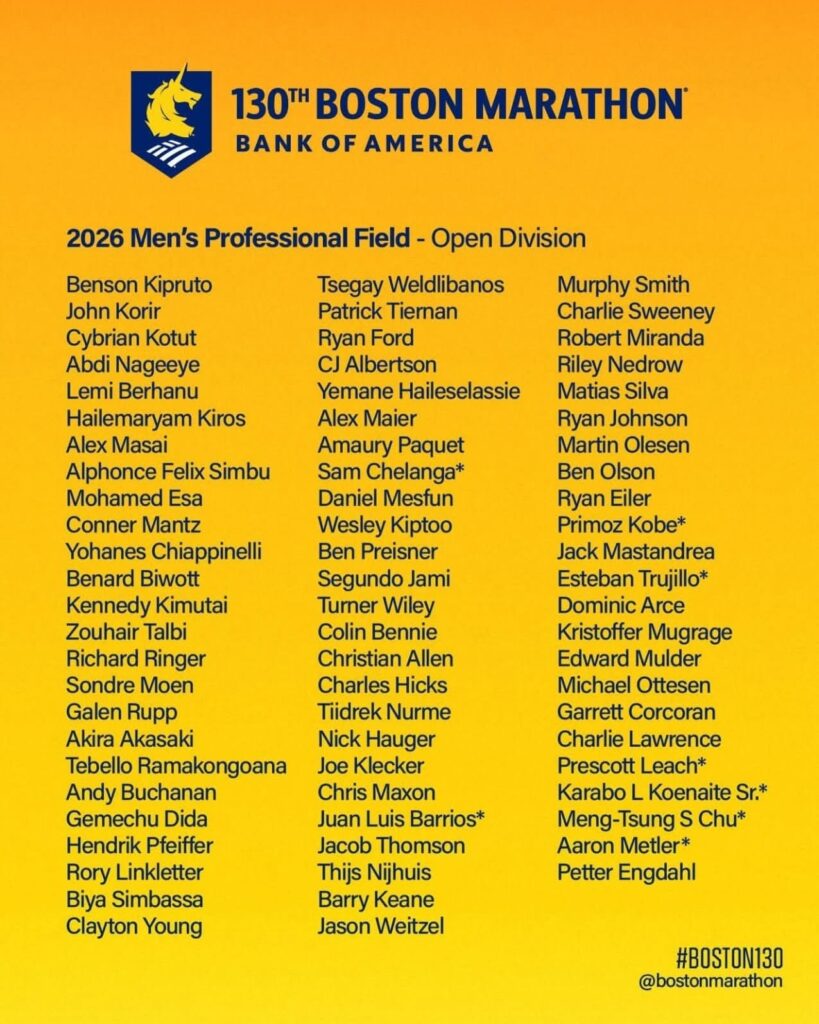
This is the list of elite runners at the 2026 Boston Marathon. Athletes marked with an asterisk, competed in the masters division. For some reason, my name was missing the asterisk.*
The atmosphere throughout the city was equally remarkable. Businesses and local residents had been eagerly anticipating the race for days before the start. Boston was literally overflowing with runners and marathon enthusiasts.
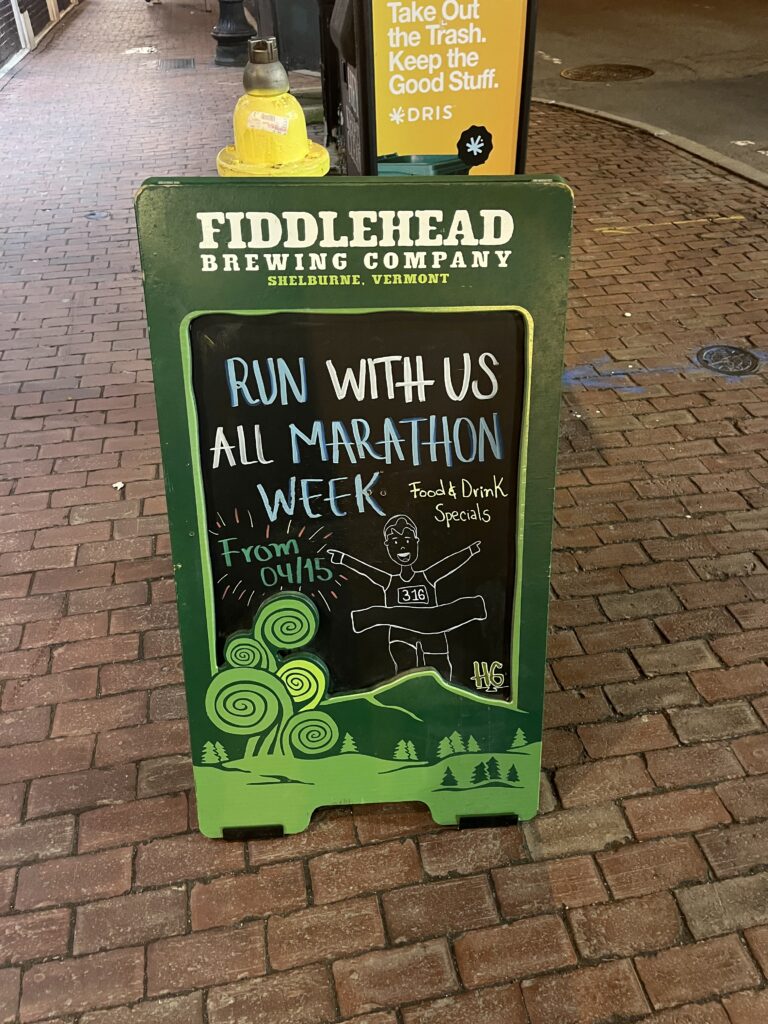
Everyone seemed friendly and genuinely excited. Since I took my own race very seriously, I didn’t have much opportunity to explore the city or fully experience the festivities before the marathon. That is fairly typical during competition trips. Everything I saw was either on the way to training sessions or while travelling between the athletes’ hotel and the race venues.
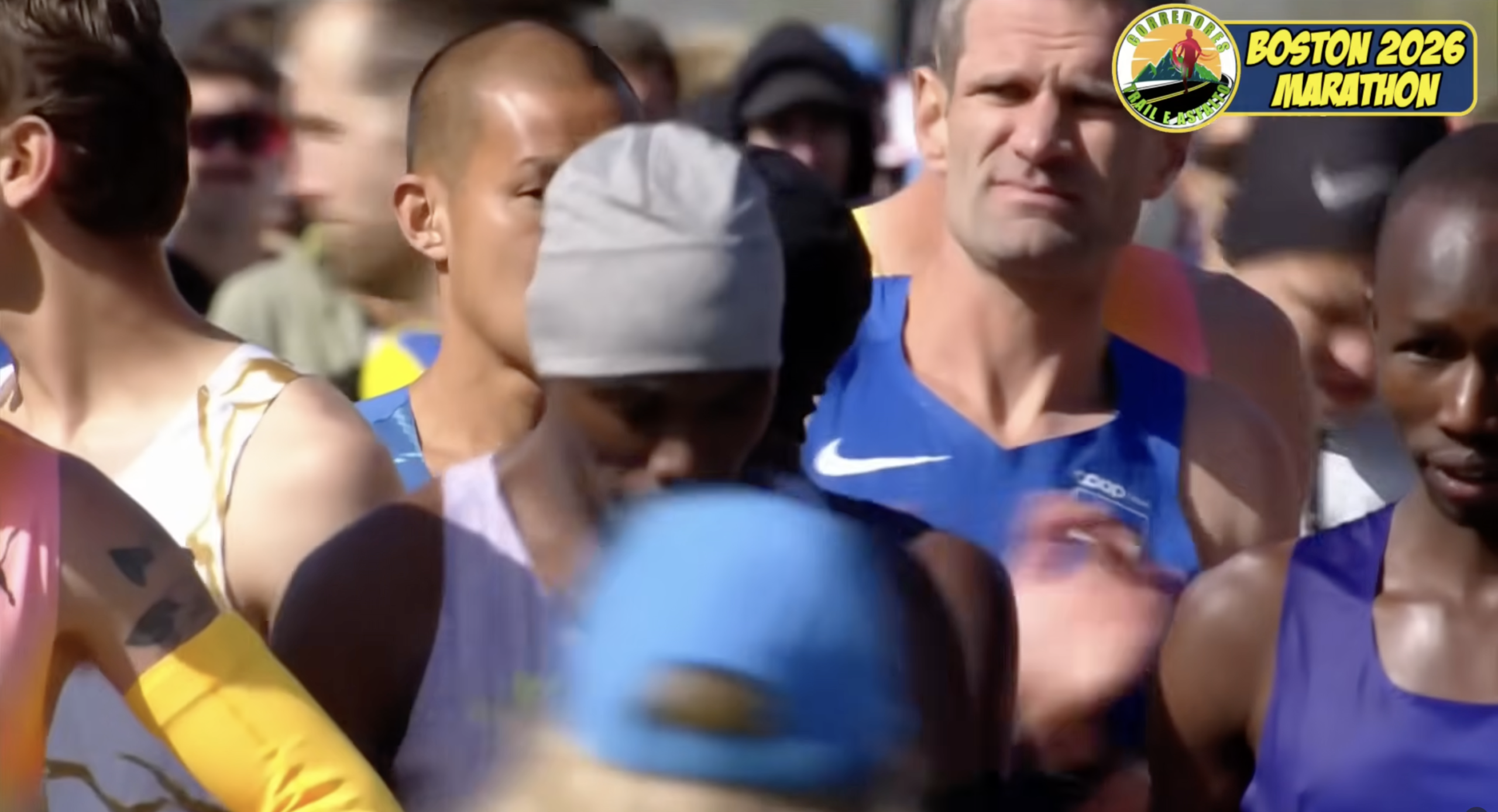
The United States national anthem was performed before the start of the Boston Marathon.
My journey to the Boston Marathon began after the World Athletics Championships in Tokyo through an almost accidental meeting with the American athletes’ manager, Isaya Okwiya. Earlier that same morning, I had planned to send him an email to ask about the race in more detail. I never got around to writing it, but I did make it onto the streets of Tokyo, where, unexpectedly, he walked straight towards me.
By December, it had become clear that Boston would be my next goal. The decision was not driven solely by the fact that it is the world’s most famous marathon and the oldest marathon of the modern era. Throughout my athletic career, I have tried to follow one simple principle: go where you are genuinely wanted.
Running Boston also felt like a way of honouring my American partners—my coach, Mark Misch, and my mentors, Nick Schuetze and Brad Bartz. Perhaps no one cared more about this race than Mark. Competing in Boston had once been one of his lifelong dreams, but a serious car accident took that opportunity away from him.
Earning a place in the elite field also required some difficult decisions. I had to end my long-standing relationship with my manager, Charles Paanakker, and submit official records of every anti-doping test I had undergone during the previous two years.
My preparation for Boston began in Kenya in December. It was the twenty-fourth marathon for which I had completed a full training cycle. In February I briefly returned to Europe to race the Naples Half Marathon. March was spent back in Kenya before I travelled to Colorado for two and a half weeks of altitude training in April. I arrived in Boston just two days before the race.
I was confident in my preparation. I had stayed free of injuries and serious illness, and I had been able to maintain a high training volume throughout the build-up. The greatest challenge was balancing elite sport with the many other responsibilities in my life.
The Boston Marathon is unlike almost any other marathon course. The opening half is predominantly downhill, followed by approximately ten kilometres of relentless climbs before the course descends once more towards the finish. To make things even more challenging, the weather in New England can be highly unpredictable.
Race day unfolded exactly as planned. My alarm went off shortly after four in the morning, and by six o’clock all elite athletes had to report to the athletes’ hotel. From there, buses transported us forty-two kilometres to the start in Hopkinton.
The conditions looked almost perfect for marathon running: 8°C, with a light tailwind rather than a headwind.
While waiting in the athletes’ tent, I quietly looked around to see which of my main rivals had arrived. One of my personal goals was to win the M40 division—a title that carries considerable prestige at the Boston Marathon.
I knew the race would begin with a long, steep downhill section. I had prepared for that, but the course proved to be much more twisting and technical than it had appeared in the videos I had studied. I was equally surprised by how aggressively the elite field attacked the opening kilometres. Everyone knew that an overly ambitious start in Boston often comes back to haunt you later in the race.
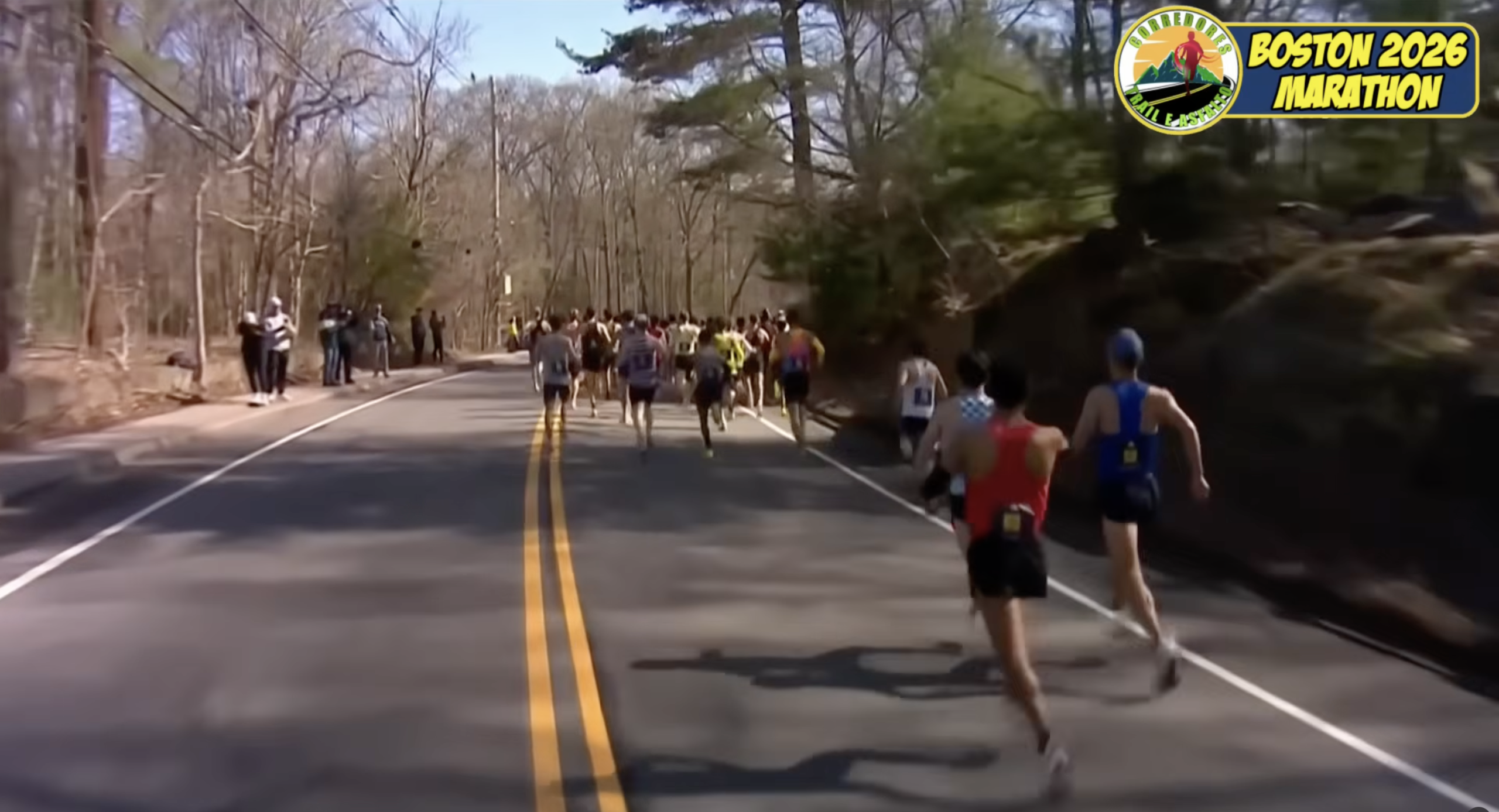
I stuck to my plan and deliberately held myself back. Yet, for reasons I still cannot fully explain, the race never felt comfortable from the very beginning. The fast early pace, the long downhill stretches, and by the tenth kilometre my lower legs were already beginning to tighten. It was unexpected, because they had never caused any significant problems during training.
By the fifteenth kilometre I was seriously questioning whether I would even be able to finish the marathon. Most likely, there was muscular fatigue hidden deep within my body—something that had given me no warning before the start.
Even so, giving up never crossed my mind.
Instead, I kept adjusting my pace, doing everything I could simply to reach the finish line. What hurt most was the realisation that I was running slower downhill than I was uphill.
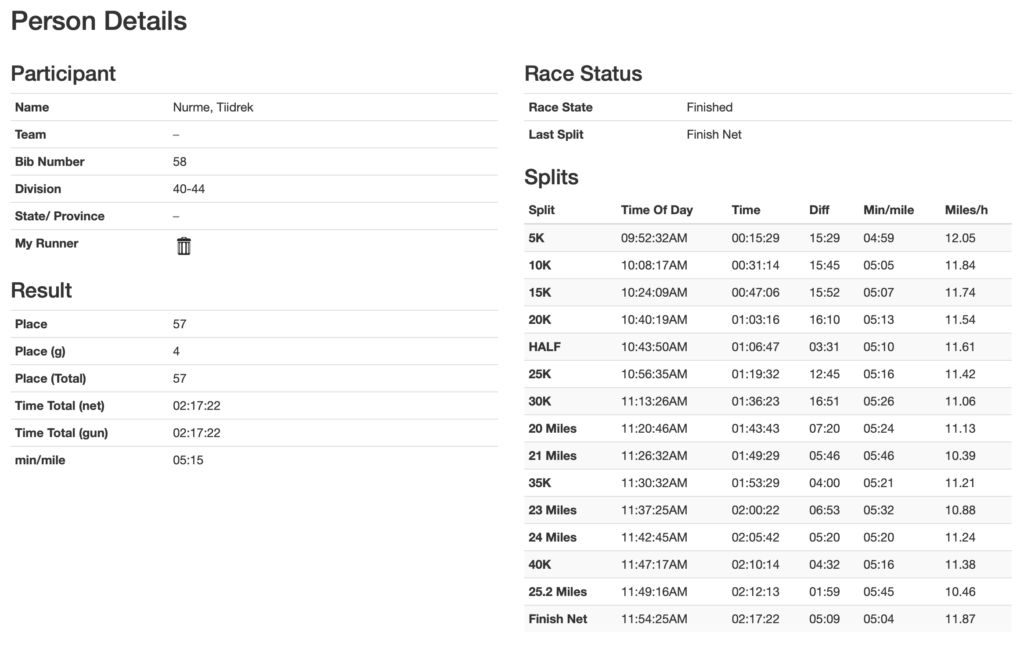
But I finished.
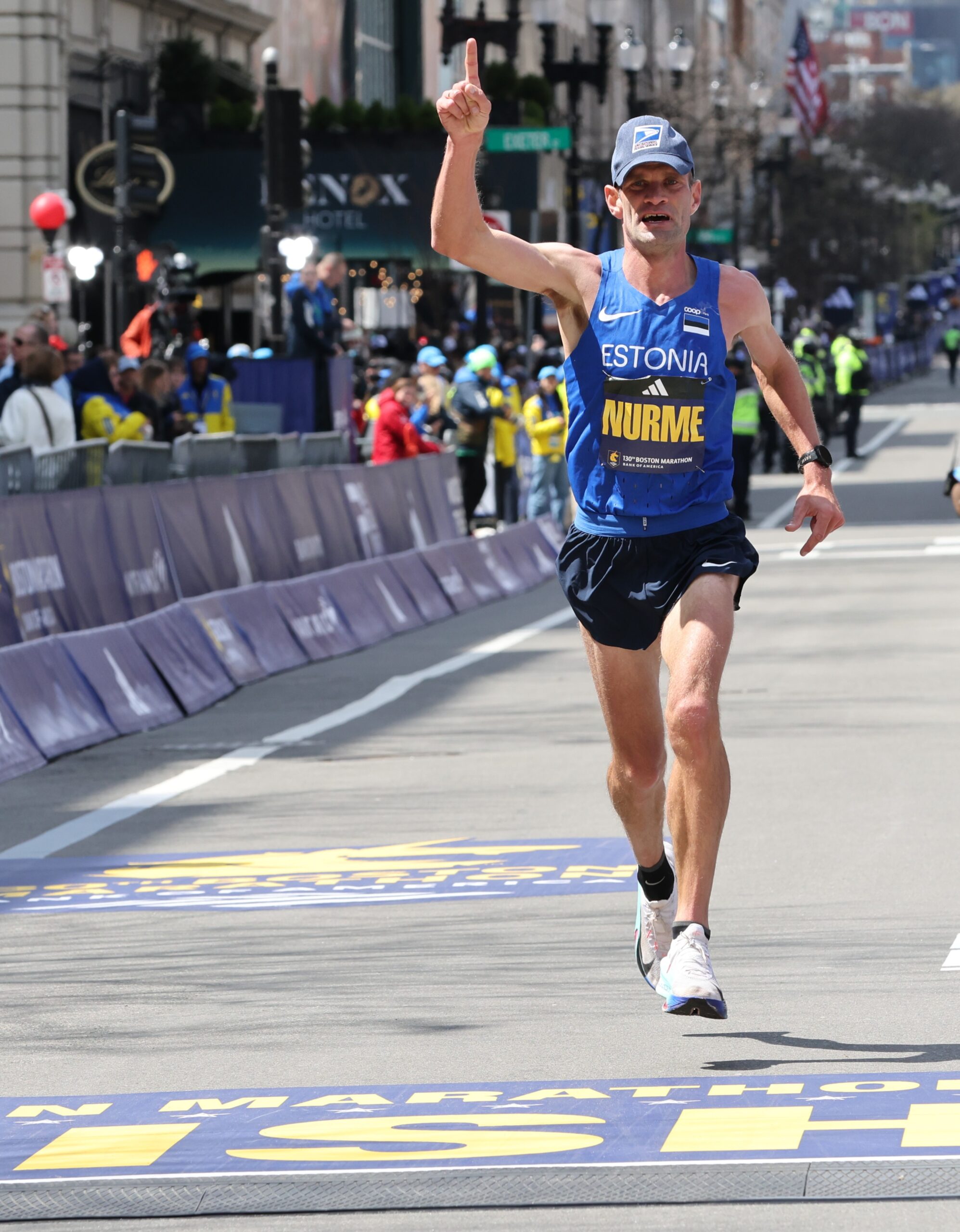
For the race I wore the Estonian national team singlet and a United States Postal Service cap. The spectators cheered for both Estonia and the postal workers.
For me, the cap carried personal meaning. It was a tribute to my Dutch manager, Charles Paanakker, who had worked as a postman for more than thirty years, and, of course, to everyone serving in the United States Postal Service.
Photo: @janemonti26.2
My finishing time of 2:17 remains the fastest ever run by an Estonian at the Boston Marathon. It earned me 57th place overall and fourth place in the M40 division. The podium was only a few dozen seconds away.
Missing it left a bittersweet feeling, but I am proud that I was able to finish the race with dignity despite legs that had become as hard as stone.
The atmosphere throughout the race was extraordinary. Spectators lined virtually the entire course, cheering every runner with the same enthusiasm. At one point, a massive U.S. military transport aircraft roared overhead while passing trains sounded their deep horns. It was Patriots’ Day, a public holiday in Massachusetts and Maine, and thousands of people had come out to celebrate.
Near Wellesley College, somewhere around the halfway point, the cheering became so overwhelming that I couldn’t help waving back, even though, as an elite athlete, I normally avoid doing such things during a race. Later, as we approached downtown Boston, thousands of Boston Red Sox fans lined the streets to support the marathon runners.
When it was all over, one thought remained.
I have unfinished business in Boston.
I know I was capable of much more had my legs not stiffened so early in the race.
I want to go back.
Boston marathon results 2026
I would like to acknowledge the people who stand behind me today:
-
Coach: Mark Misch
-
Assistant Coach and Manager: Harry Lemberg
-
Spiritual Mentors: Brad Bartz and Nick Schuetze
-
Massage Therapist: Peeter Nigol
-
Sports Physicians: Agnes Mägi and Mihkel Mardna
-
My wife, Maili, and our children